
Best Time to Pour Concrete in Lawrenceville GA
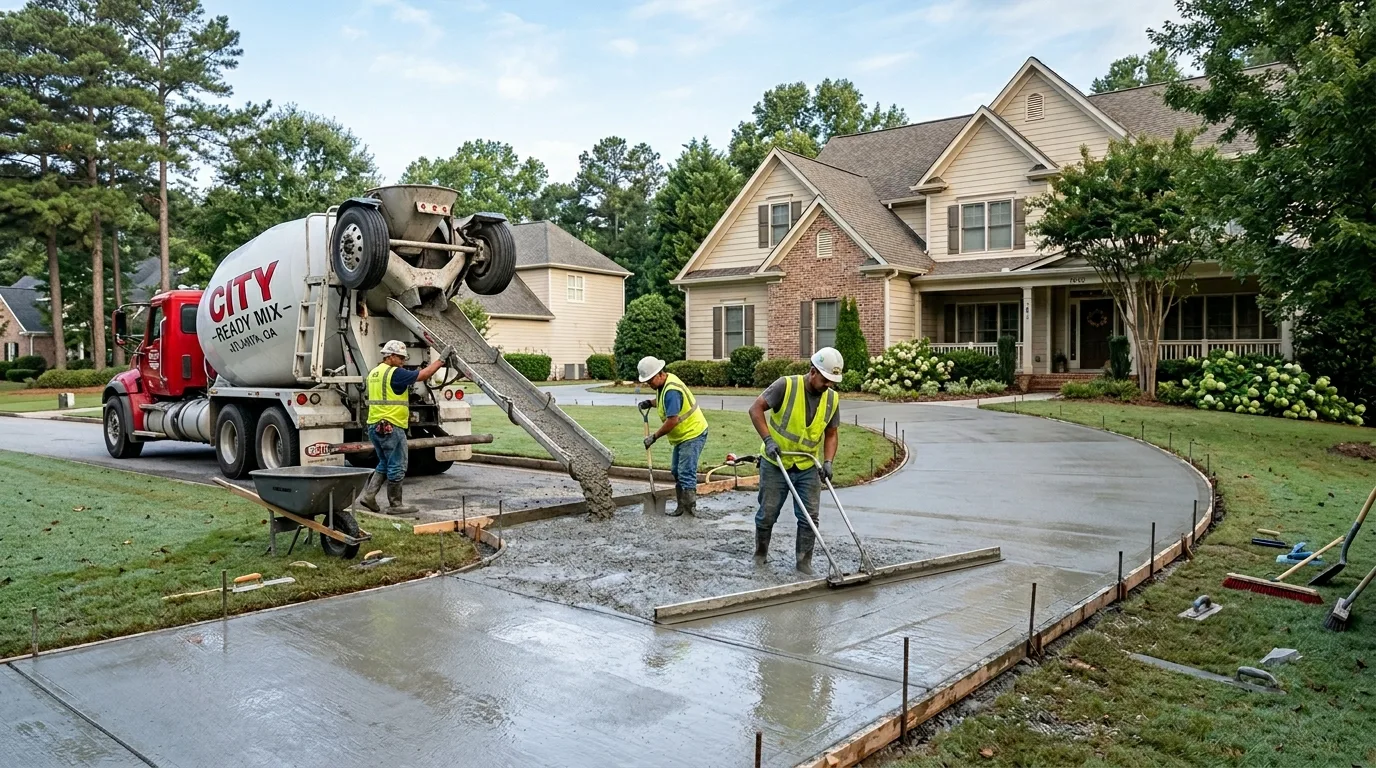
The best time to pour concrete in Lawrenceville, GA is not a single month — it’s a set of conditions that determine whether your concrete cures correctly and achieves its designed strength. Georgia’s climate creates two challenging pouring windows: the deep summer heat (June through August) when excessive evaporation is the primary risk, and occasional winter cold snaps (December through February) when concrete that freezes before curing fails at a fraction of its designed strength. This guide walks through Lawrenceville’s climate month by month and tells you exactly what conditions to target — and what conditions to avoid — for any concrete project in Gwinnett County.
Planning a Concrete Project in Lawrenceville?
Tell us about your project and we'll connect you with an independent concrete contractor serving Lawrenceville and Gwinnett County. Call (770) 637-7481.
Why Timing Matters for Concrete in Lawrenceville
Concrete sets and cures through a chemical process called hydration — water reacts with cement particles to form the crystals that give concrete its strength. This process is temperature-dependent in both directions. Too cold (below 40°F), and hydration slows to the point where concrete may not achieve adequate early strength before a freeze event damages it. Too hot (above 90°F ambient, or above 120°F at the surface), and water evaporates from the mix faster than hydration can use it — producing a weak, brittle surface layer prone to cracking and dusting.
Lawrenceville’s climate creates specific challenges in both directions. Understanding them helps you time your project for the best outcome — and helps you evaluate whether a contractor’s scheduling suggestion makes sense.
Month-by-Month Concrete Pouring Guide for Lawrenceville
March through May — Ideal Window
Spring is the best concrete pouring season in Lawrenceville. Daytime temperatures in the 60s and 70s allow concrete to cure at the pace it’s designed for, and the cooler nights (frequently in the 40s–50s) slow surface evaporation without threatening freeze damage. March and April are particularly favorable: Gwinnett County’s soils are saturated from winter rains, which actually aids curing by keeping the underlying ground from pulling moisture from the slab from below.
The spring window does bring Lawrenceville’s heaviest rainfall — average precipitation in March, April, and May runs 4–5 inches per month. Scheduling around weather windows is important; rain falling on fresh concrete before the surface has set can wash out the cement paste and produce a weak, pitted surface.
Recommendation: March through May is the optimal scheduling window for most concrete projects in Lawrenceville. Request weather-contingent scheduling from your contractor and confirm they monitor forecasts for pours within 24–48 hours.
June through August — Challenging, Manageable with Precautions
Summer is Lawrenceville’s most demanding concrete pouring season. Daytime highs regularly reach 90–95°F in June, July, and August, and asphalt and concrete surfaces in direct sun reach 140–160°F. At these temperatures:
- Concrete begins to lose workability rapidly — the finishing window shrinks from 4–6 hours to 2–3 hours in peak heat
- Surface evaporation can exceed hydration, producing plastic shrinkage cracks within hours of placement
- Hot aggregate and mix water can cause concrete to arrive at the pour site already partially set if transit time is too long
None of this makes summer pouring impossible — it makes it more exacting. Experienced concrete contractors in Lawrenceville use specific summer techniques: early morning pours before peak heat (6–10 AM), ice-chilled mix water to lower concrete temperature, chilled aggregate, shading freshly poured sections, and evaporation retarders applied before finishing. Curing compound or wet burlap applied immediately after finishing prevents rapid surface drying.
Recommendation: If your project needs to proceed in summer, verify that your contractor uses specific hot-weather concrete protocols. A contractor who doesn’t mention these techniques for a summer pour may not be accounting for them.
September through November — Second Best Window
Fall in Lawrenceville mirrors spring’s favorable conditions: temperatures declining through the 70s and 60s, lower humidity, and reduced direct sun intensity. October and November are excellent months for concrete work — the clay subgrade has dried from summer and provides stable base conditions, temperatures support normal hydration rates, and the finishing window is predictable.
The late fall risk is first frost. Lawrenceville’s first frost typically arrives in late November to early December. Fresh concrete must not freeze in its first 24–48 hours; if a cold front pushes overnight temperatures below 35°F within 48 hours of a pour, the concrete needs to be protected with insulating blankets or heat sources.
Recommendation: September through mid-November is an excellent second pouring window. Schedule early enough that the project is complete and cured before the first frost window in late November.
December through February — Cold Weather Protocols Required
Lawrenceville winters are mild compared to most of the country — the city averages fewer than 10 days per year with temperatures below freezing. But those cold snaps arrive unpredictably, and a freeze event within 48–72 hours of a concrete pour can destroy it.
Winter concrete pouring in Lawrenceville is manageable with proper protocols. Contractors who routinely work through winter use: accelerating admixtures to speed early strength gain, heated mix water, insulating curing blankets applied immediately after finishing, and conservative scheduling that avoids pouring when a freeze is forecast within 72 hours.
The biggest risk of winter pouring in Gwinnett County is not the cold itself — it’s pouring without precautions because Lawrenceville’s winters seem mild. A week of 65°F temperatures in January followed by a 28°F night is common, and contractors who get comfortable with the mild baseline sometimes skip cold-weather protocols right before a cold snap arrives.
Recommendation: Winter projects are doable with experienced contractors who use explicit cold-weather protocols. Ask specifically what precautions they take if overnight temperatures drop unexpectedly after a pour.
Schedule Your Concrete Project for the Right Window
Tell us about your project and we'll connect you with an independent concrete contractor serving Lawrenceville and Gwinnett County. Call (770) 637-7481.
Ideal Concrete Pouring Conditions: The Numbers
Regardless of season, these are the environmental targets for an optimal concrete pour in Lawrenceville:
| Condition | Target Range |
|---|---|
| Ambient air temperature | 50°F – 85°F |
| Concrete mix temperature | 50°F – 90°F |
| Wind speed | Under 15 mph |
| Relative humidity | Above 40% |
| Soil temperature | Above 40°F |
| No rain in 24 hours before pour | ✓ |
| No rain forecast for 24 hours after pour | ✓ |
| No freeze forecast for 72 hours after pour | ✓ |
Spring in Lawrenceville — specifically April and early May — hits nearly all of these targets naturally, which is why it’s the preferred window.
How Timing Interacts With Lawrenceville’s Clay Soil
One timing consideration specific to Gwinnett County’s red clay is soil moisture at the time of the pour. Pouring concrete directly after a heavy rain event — when the clay subgrade is saturated — can lead to two problems:
- Saturated clay provides less bearing capacity temporarily, which can complicate base compaction and grading on sites that haven’t already had base work done.
- Very wet subgrade can draw moisture upward through the aggregate base and into the fresh concrete from below, affecting the water-to-cement ratio of the bottom portion of the slab.
This doesn’t mean avoiding spring — it means allowing 2–3 days of dry weather after significant rainfall before beginning site work and base preparation. Most experienced Lawrenceville contractors already account for this in their scheduling.
Frequently Asked Questions
Can you pour concrete in winter in Lawrenceville GA?
Yes, with appropriate precautions. Lawrenceville winters are mild enough to allow concrete work most of the time. The risk is cold snaps — periods where overnight temperatures drop below 35°F within 48–72 hours of a pour. Experienced contractors use heated mix water, accelerating admixtures, and insulating curing blankets to pour safely in cold weather. If your contractor doesn’t mention cold-weather protocols for a December through February project, ask explicitly what they do when a cold snap arrives unexpectedly.
What time of day should concrete be poured in Lawrenceville’s summer heat?
Early morning pours — starting at 6–7 AM and finishing by 10–11 AM — give the crew the best working window before peak heat arrives. By midday in July, ambient temperatures in Lawrenceville reach conditions that significantly shorten the finishing window. Evening pours are an alternative on very hot days, but they require adequate lighting and can extend into dew periods that complicate surface finishing. See our concrete driveway service page for how we approach summer scheduling.
Does spring rain in Lawrenceville affect concrete pouring schedules?
Yes — spring is Lawrenceville’s rainiest season (4–5 inches per month in March, April, and May). Most concrete contractors in Gwinnett County build weather-contingency windows into spring project timelines. Rain falling on fresh concrete before the surface sets can damage the finish and dilute surface cement paste. Rain falling after the concrete has set but before it has cured is benign — wet curing is actually beneficial. The critical window is the first 6–8 hours after the pour.
Related: