
Concrete Foundation Repair in Gwinnett County: What to Know
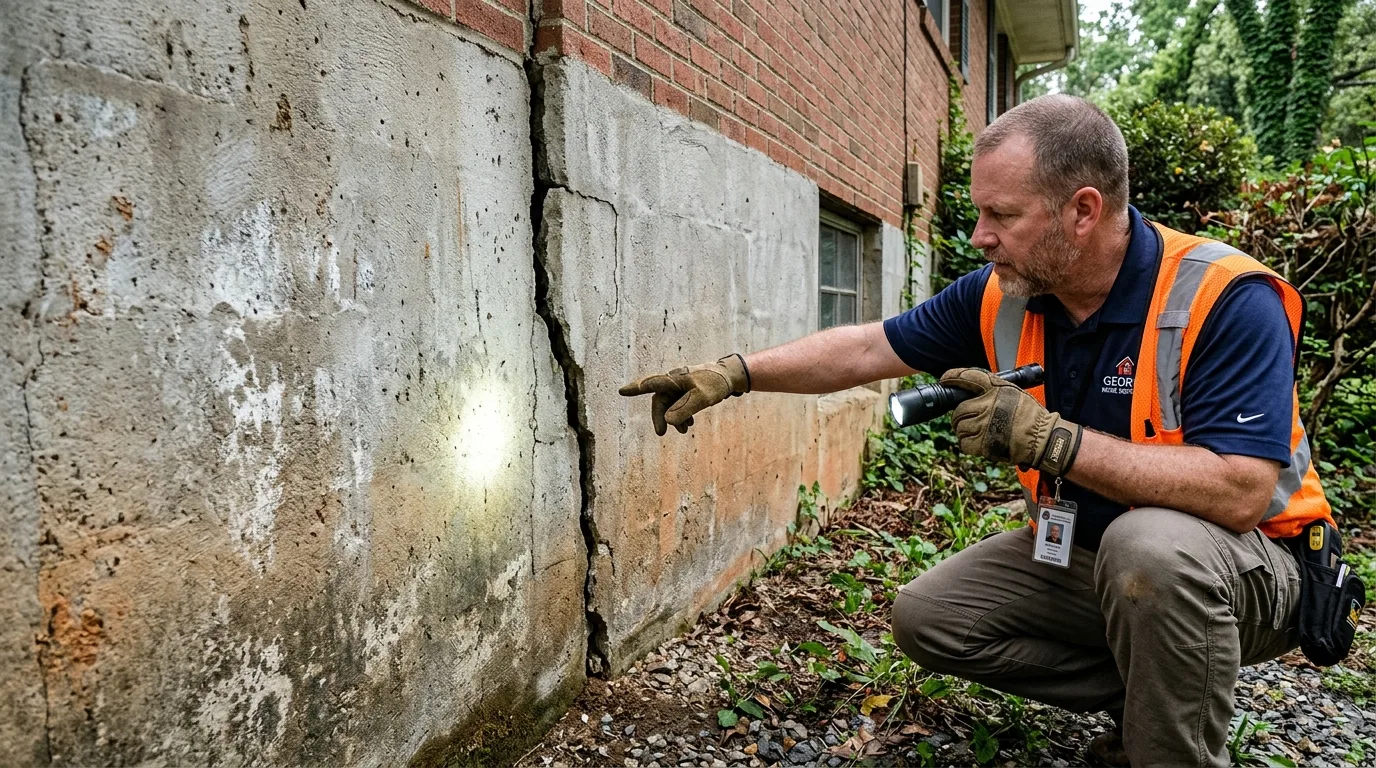
Foundation issues in Gwinnett County follow a specific pattern driven by the expansive red clay soil that underlies most of the county’s residential land. Unlike foundation problems in sandy or rocky soil regions — where settling is usually slow and uniform — Lawrenceville’s clay-based soil causes differential movement: sections of soil beneath a foundation expand and contract unevenly with seasonal moisture changes, pushing or pulling the foundation at different rates in different locations. The result is cracks, settling, and structural stress that appears years or decades after construction, often triggered by a drought, a drainage change, or a wet season more severe than average. This guide explains what foundation movement looks like, what causes it specifically in Gwinnett County, and what the repair options are.
Concerned About Foundation Cracks in Your Lawrenceville Home?
We assess foundation conditions honestly — we only recommend repair when repair is warranted. Call (888) 376-0955.
Warning Signs of Foundation Movement in Gwinnett County Homes
The signs of foundation movement in Lawrenceville homes are often visible in other parts of the house before they’re obvious at the foundation itself. Gwinnett County homeowners should pay attention to:
Interior signals:
- Doors or windows that stick or don’t close correctly — particularly if this is a new development, not a long-standing issue
- Cracks in drywall, particularly diagonal cracks running from the corners of windows and doors
- Gaps opening between the ceiling and interior walls or between the wall and the floor
- Floors that feel noticeably sloped or bouncy in areas that didn’t feel that way previously
- Cracks in tile floors, especially in lines that follow the grout joints for extended lengths
Exterior signals:
- Horizontal or stair-step cracks in brick exteriors — horizontal cracks are particularly significant because they indicate lateral soil pressure
- Diagonal cracks in stucco or EIFS cladding emanating from window and door corners
- Visible gaps between the garage door frame and the garage slab
- The foundation itself: cracks wider than 1/4 inch, cracks that run the full height of the foundation wall, or areas where the foundation has visibly moved relative to adjacent sections
Not necessarily a problem: Hairline cracks (under 1/16 inch) in concrete foundations are common and typically the result of normal concrete shrinkage during curing. These are cosmetic unless they grow over time. Take a photo with a ruler next to the crack each spring and fall — if the crack is growing, it needs professional evaluation.
Why Gwinnett County’s Clay Soil Creates Foundation Risk
The clay soil that underlies most of Lawrenceville and the surrounding Gwinnett County area contains smectite mineral fractions that can change volume by 10–20% between their wettest and driest states. When the soil beneath a foundation slab or footing swells, it pushes up. When it shrinks, it pulls away, leaving voids that remove support from the foundation.
The critical factor is differential movement — different parts of the foundation sitting on soil that changes moisture content at different rates. The perimeter of a foundation footprint dries out faster than the center (it’s more exposed to sun and wind). When Gwinnett County experiences a severe drought — as it did in 2016 and 2022 — the perimeter soil shrinks faster than the center soil, removing support from the edges of the foundation while the center remains relatively stable. This creates inward-rolling settlement at the edges, which is the most common foundation failure mode in Lawrenceville’s residential market.
The opposite occurs during extended wet periods: perimeter soil absorbs moisture and swells first, pushing up the exterior edges while the center remains stable. This creates outward movement — less common but possible in low areas where water pools against the foundation.
Foundation Repair Options for Lawrenceville Homes
Option 1: Crack injection (for isolated structural cracks)
Epoxy injection or polyurethane injection into foundation cracks bonds the cracked concrete together and stops water infiltration. This is appropriate for cracks that have stabilized — meaning the crack is no longer actively growing — and where the underlying soil movement has been addressed (through drainage correction or soil stabilization).
Crack injection is a repair, not a fix for active movement. If the soil is still moving, the injected crack will re-open or new cracks will develop. A contractor should always investigate and address the source of movement before recommending crack injection as a final solution.
Option 2: Mudjacking or slab lifting (for settled foundation slabs)
For slab-on-grade foundations where sections have settled differentially, mudjacking (pumping a cement/soil slurry beneath the slab to lift it) or polyurethane foam injection (expanding foam under the slab) can raise settled sections back toward level. This is effective when the settlement is isolated, the concrete itself is structurally sound, and the cause of settlement (typically a void created by dried-out clay or eroded base material) can be filled.
Mudjacking is not appropriate when the slab has multiple structural cracks, when there is evidence of ongoing active settlement, or when the foundation design itself (undersized footings, inadequate reinforcement) is the root cause of the problem.
Option 3: Piering (for significant structural settlement)
When foundation settlement is significant enough to affect structural integrity — sticking doors throughout the house, visible slope in floors, major cracks in brick or drywall — piering may be required. Steel piers are driven through the clay soil to reach bedrock or a stable soil layer below the expansive clay, and the foundation is connected to the piers to resist further movement.
Piering is the most durable long-term solution for major foundation settlement on Gwinnett County’s clay soils because it bypasses the unstable clay layer entirely. It is also the most expensive option and typically involves structural engineering review. This work is outside the scope of a concrete contractor — it requires a foundation repair specialist or structural engineer.
Option 4: Drainage correction (the prevention option)
Many foundation movement problems in Lawrenceville are caused or significantly worsened by drainage issues: downspouts discharging against the foundation, low grading that pools water at the perimeter, cracked or offset drain lines that release water into the soil adjacent to the foundation. Correcting drainage is often the highest-leverage intervention for preventing further movement in cases where the foundation damage is not yet severe.
A contractor who recommends only repair without evaluating drainage is treating the symptom without the cause. Any complete foundation repair assessment for a Lawrenceville home should include an evaluation of site drainage and grading.
Foundation Crack Assessment in Lawrenceville or Gwinnett County
Honest assessment of what you have and what it needs — no overselling repair scope. Call (888) 376-0955.
Costs for Foundation Work in Lawrenceville
Foundation repair costs vary enormously based on severity and repair type:
- Crack injection (isolated cracks): $300–$1,500 depending on crack length and number
- Mudjacking or foam injection: $500–$3,000 for a residential slab-on-grade
- Drainage correction and regrading: $500–$4,000 depending on scope
- Piering for major settlement: $5,000–$20,000+ depending on number of piers required
New concrete foundation pours for additions, outbuildings, or accessory structures in Gwinnett County run $5–$10 per square foot. See our concrete foundation service page for Lawrenceville for what a new foundation pour involves and includes.
What to Do If You Suspect Foundation Problems
- Document the cracks with photos and measurements before calling anyone
- Note when the issue appeared or when you first noticed it — specifically whether it followed a drought, a wet season, or a plumbing issue
- Check your gutters and downspouts: are they functional, and do they discharge water away from the foundation?
- Check the grade around your foundation: does it slope away from the house or toward it?
- Call a qualified concrete contractor or structural engineer for an assessment — not a door-to-door foundation repair salesperson who found you through a mailing
When to call a structural engineer instead of a contractor: If you have horizontal cracks in a masonry foundation wall, visible structural compromise (shifted wall sections, major floor deflection), or cracks that have grown rapidly, a structural engineer’s assessment is appropriate before any repair begins. Engineers provide an objective analysis without a financial interest in recommending a specific repair method.
Frequently Asked Questions
What causes most foundation cracks in Lawrenceville GA?
The most common cause is Gwinnett County’s expansive clay soil contracting during drought conditions — pulling away from the exterior edges of the foundation while the center retains more moisture. This differential drying creates stress that produces diagonal cracks from window and door corners, stair-step cracks in brick, and in more severe cases, inward movement of the perimeter walls. Secondary causes include drainage issues (water pooling against the foundation in wet periods) and plumbing leaks that saturate soil in localized areas. See our concrete foundation service page for how we engineer foundations to minimize this movement.
Is foundation repair in Gwinnett County expensive?
Costs range from a few hundred dollars for minor crack injection to tens of thousands for major piering work on a significantly settled foundation. Most residential foundation issues in Lawrenceville that involve concrete repair (rather than structural piering) fall in the $500–$5,000 range depending on scope. Drainage correction, which is often the most important intervention, typically costs $500–$3,000. The earlier a problem is caught and addressed, the less expensive the repair.
Can I repair a concrete foundation crack myself?
DIY crack injection products are available and appropriate for truly minor, stable, non-structural hairline cracks — the kind that have been the same width for years and don’t show signs of movement. Any crack wider than 1/4 inch, actively growing, or associated with visible structural changes in the house (sticking doors, sloped floors) requires a professional assessment before repair. The risk of DIY repair on a structural crack is covering a problem that continues to develop underneath the patched surface.
Related: